Wellness Trends 2024 A Holistic Overview

Wellness Trends 2024 presents a fascinating exploration of the evolving landscape of health and wellbeing. This year promises a dynamic shift in how we approach self-care, incorporating innovative technologies, ancient practices, and a renewed focus on preventative measures. We delve into the key trends shaping this evolution, examining their origins, benefits, and potential challenges.
From the rise of holistic health practices to the impact of social media on wellness information, this overview provides a comprehensive look at the factors driving the 2024 wellness revolution. We’ll examine effective strategies for healthy living, explore popular nutrition and diet trends, and analyze the crucial role of preventative healthcare and stress management in achieving optimal wellbeing.
The Role of Wellness Coaching
In today’s fast-paced world, prioritizing well-being is more crucial than ever. Wellness coaching offers a personalized approach to achieving holistic health, guiding individuals toward sustainable lifestyle changes that enhance physical, mental, and emotional well-being. It’s a collaborative process that empowers individuals to take ownership of their health journey, moving beyond simply addressing symptoms to cultivating lasting well-being.Wellness coaching provides numerous benefits.
Working with a coach offers accountability and support, crucial elements for maintaining long-term commitment to wellness goals. Coaches provide personalized strategies tailored to individual needs and preferences, increasing the likelihood of success. They also offer a non-judgmental space for exploring challenges and celebrating achievements, fostering self-awareness and confidence in the process. The structured approach of coaching helps individuals break down overwhelming goals into manageable steps, making the journey feel less daunting and more achievable.
Ultimately, wellness coaching contributes to improved physical health, reduced stress, increased self-esteem, and a greater sense of purpose and fulfillment.
Benefits of Working with a Wellness Coach
Individuals seeking improved health and well-being can significantly benefit from partnering with a wellness coach. A coach provides structured support, helping clients set realistic goals, track progress, and overcome obstacles. This personalized approach leads to improved adherence to wellness plans and, consequently, better outcomes. For example, a coach might help someone struggling with weight management to develop a sustainable meal plan and exercise routine, providing encouragement and guidance along the way.
Similarly, a coach can help someone manage stress by teaching coping mechanisms and promoting mindfulness practices. The personalized attention and accountability provided by a coach often result in more significant and lasting changes compared to self-directed efforts.
Key Qualities of an Effective Wellness Coach
An effective wellness coach possesses a unique blend of skills and attributes. Empathy and active listening are essential for building trust and rapport with clients. A coach should be able to create a safe and supportive environment where clients feel comfortable sharing their vulnerabilities and challenges. Strong communication skills are crucial for clearly conveying information, providing constructive feedback, and adapting their approach to meet the diverse needs of their clients.
Furthermore, effective coaches are knowledgeable about various wellness modalities and possess the ability to tailor their approach to individual circumstances and preferences. They are also adept at motivating clients, helping them stay focused on their goals, and celebrating their successes. Finally, a strong ethical foundation, including maintaining confidentiality and adhering to professional standards, is paramount.
Types of Wellness Coaching Available
The field of wellness coaching encompasses a variety of specializations, catering to diverse needs and interests. Health coaching focuses on improving physical health through nutrition, exercise, and disease management. Life coaching takes a broader approach, addressing various aspects of life, including career, relationships, and personal development. Executive coaching is tailored to professionals seeking to enhance their leadership skills and work-life balance.
Spiritual coaching helps individuals connect with their inner selves and explore their purpose and values. Financial wellness coaching guides individuals in developing healthy financial habits and managing their finances effectively. The choice of coaching type depends on individual goals and priorities. For instance, someone looking to improve their diet and fitness might choose a health coach, while someone facing career challenges might benefit from life coaching.
Stress Management Techniques: Wellness Trends 2024
Stress is a pervasive aspect of modern life, impacting our physical and mental well-being. Learning effective stress management techniques is crucial for maintaining a healthy and balanced lifestyle. This section Artikels five evidence-based techniques, explaining their underlying mechanisms and providing a practical step-by-step guide for implementation.
Deep Breathing Exercises
Deep breathing exercises, particularly diaphragmatic breathing, activate the parasympathetic nervous system, counteracting the effects of the stress response. When stressed, our breathing becomes shallow and rapid, leading to increased heart rate and anxiety. Deep, slow breaths stimulate the vagus nerve, which helps regulate heart rate and reduces cortisol (the stress hormone) levels. This technique involves consciously inhaling deeply into your abdomen, holding for a few seconds, and then exhaling slowly.
Regular practice can significantly reduce feelings of anxiety and promote relaxation.
Progressive Muscle Relaxation, Wellness Trends 2024
Progressive muscle relaxation (PMR) involves systematically tensing and releasing different muscle groups in the body. This technique works by interrupting the physical tension associated with stress. By consciously focusing on the sensations of tension and release, individuals become more aware of their body’s response to stress and learn to control it. The physiological mechanism involves reducing muscle tension, which in turn lowers overall physiological arousal and promotes a sense of calm.
This process can be done in a quiet environment, focusing on different muscle groups, starting with the toes and working upwards to the head.
Mindfulness Meditation
Mindfulness meditation involves focusing on the present moment without judgment. This practice helps to break the cycle of rumination and worry, which are common features of stress. Neuroscientific studies have shown that regular mindfulness meditation increases activity in the prefrontal cortex, the brain region responsible for executive functions like attention and emotional regulation. This increased activity helps to counter the effects of stress on the amygdala, the brain region associated with fear and anxiety.
A simple practice involves focusing on your breath, body sensations, or sounds, gently redirecting your attention when your mind wanders.
Physical Exercise
Regular physical activity is a highly effective stress reliever. Exercise releases endorphins, which have mood-boosting and pain-relieving effects. Moreover, physical activity helps to regulate the hypothalamic-pituitary-adrenal (HPA) axis, which is responsible for the body’s stress response. Studies show that even moderate exercise can significantly reduce cortisol levels and improve mood. Aim for at least 30 minutes of moderate-intensity exercise most days of the week.
Activities such as brisk walking, jogging, swimming, or cycling are beneficial.
Cognitive Behavioral Therapy (CBT) Techniques
Cognitive Behavioral Therapy (CBT) techniques help individuals identify and challenge negative thought patterns and behaviors that contribute to stress. CBT works by changing the way we think and behave in response to stressful situations. This involves identifying cognitive distortions (e.g., catastrophizing, all-or-nothing thinking), challenging their validity, and replacing them with more realistic and helpful thoughts. CBT also involves developing coping strategies for managing stressful situations.
This approach can be particularly helpful for chronic stress and anxiety disorders.
Step-by-Step Guide to Stress Management
- Identify your stressors: Keep a journal to track your stressors and their impact on your well-being.
- Choose your techniques: Select two or three techniques from the list above that resonate with you.
- Practice regularly: Consistency is key. Schedule time each day for stress management practices.
- Start small: Begin with short sessions (5-10 minutes) and gradually increase the duration.
- Be patient: It takes time to develop effective stress management skills. Don’t get discouraged if you don’t see results immediately.
- Seek professional help: If you are struggling to manage stress on your own, consider seeking help from a therapist or counselor.
Exploring the Mind-Body Connection
The intricate relationship between mental and physical health is increasingly recognized as a cornerstone of overall wellbeing. It’s no longer sufficient to view these aspects as separate entities; rather, they are deeply intertwined, influencing and impacting each other in profound ways. Understanding this connection is crucial for developing holistic wellness strategies.The impact of mental wellbeing on physical health is significant and multifaceted.
A healthy mind contributes to a healthy body, while chronic stress, anxiety, and depression can negatively affect various physiological systems.
Mental Wellbeing’s Impact on Physical Health
Mental health significantly influences physical health outcomes. For example, prolonged stress weakens the immune system, making individuals more susceptible to illness. Studies have shown a correlation between chronic stress and an increased risk of cardiovascular disease, as stress hormones can elevate blood pressure and contribute to the formation of plaque in arteries. Similarly, depression is linked to a higher incidence of chronic pain conditions, potentially due to altered pain perception and reduced motivation for self-care.
Anxiety can manifest physically through symptoms like digestive issues, headaches, and insomnia. These examples highlight the critical role mental wellbeing plays in maintaining physical health.
Practices Strengthening the Mind-Body Connection
Several practices effectively strengthen the mind-body connection, fostering resilience and overall wellbeing. Mindfulness meditation, for instance, cultivates present moment awareness, reducing stress and improving emotional regulation. Regular physical exercise not only benefits physical health but also releases endorphins, improving mood and reducing anxiety. Yoga combines physical postures, breathing techniques, and meditation, promoting both physical flexibility and mental clarity.
Spending time in nature has also been shown to reduce stress and improve mental wellbeing, connecting individuals to a larger, calming environment. These practices encourage a holistic approach to wellbeing, recognizing the interconnectedness of mind and body.
Health Technology and Apps
The rise of health technology and associated apps has revolutionized personal wellness and healthcare access. These tools offer convenient, often personalized, approaches to health management, empowering individuals to take a more proactive role in their wellbeing. This section explores three innovative examples, examining their impact and comparing key features.
Innovative Health Technology Applications
Three innovative applications currently impacting personal wellness are wearable fitness trackers, telehealth platforms, and mental health apps. These technologies represent a shift towards preventative care and accessible mental health support.
| Technology | Impact on Personal Wellness | Impact on Healthcare Access | Key Features |
|---|---|---|---|
| Wearable Fitness Trackers (e.g., Fitbit, Apple Watch) | Increased awareness of daily activity levels, sleep patterns, and heart rate, encouraging healthier lifestyle choices. Provides data-driven insights to motivate users toward fitness goals. | While not replacing traditional healthcare, these trackers provide preliminary health data that can be shared with healthcare providers, facilitating earlier detection of potential issues. | Step counting, heart rate monitoring, sleep tracking, calorie counting, GPS tracking for workouts, integration with health apps. |
| Telehealth Platforms (e.g., Teladoc, MDLive) | Provides convenient access to medical professionals for consultations, reducing barriers related to location, time constraints, and transportation. Allows for remote monitoring of chronic conditions. | Expands healthcare access to individuals in remote areas or those with mobility limitations. Offers a more efficient and cost-effective alternative for routine check-ups and certain medical needs. | Video conferencing with doctors, prescription refills, secure messaging, appointment scheduling, health record access. |
| Mental Health Apps (e.g., Calm, Headspace) | Provides readily available tools for stress management, mindfulness practices, and mental wellness exercises. Offers personalized programs and progress tracking. | Increases accessibility to mental health resources, particularly for individuals who may face stigma or barriers to traditional therapy. Offers a supplementary tool for individuals already receiving professional care. | Guided meditations, breathing exercises, sleep stories, mood tracking, cognitive behavioral therapy (CBT) modules, journaling prompts. |
Comparison of Features and Functionalities
The three technologies, while distinct, share some common functionalities, such as data tracking and personalized recommendations. Wearable fitness trackers primarily focus on physical health metrics, while telehealth platforms provide access to medical professionals. Mental health apps concentrate on emotional and psychological well-being. However, increasing integration is evident; for example, some fitness trackers now incorporate features related to stress and sleep quality, while some telehealth platforms incorporate mental health support services.
The convergence of these technologies suggests a future where holistic wellness is more comprehensively addressed through interconnected digital tools.
Emerging Health News and Trends
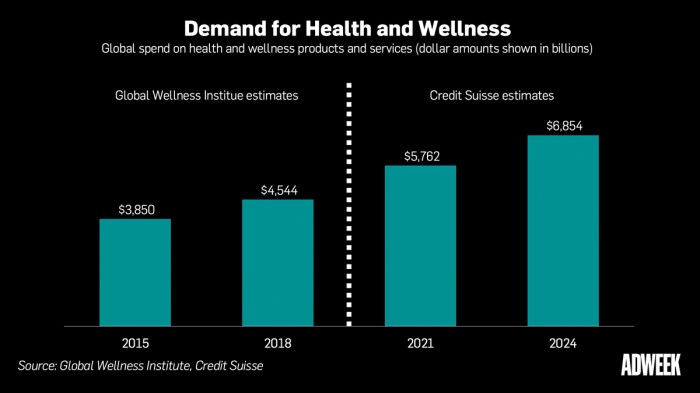
The wellness landscape is constantly evolving, driven by advancements in research, technology, and shifting societal priorities. Staying abreast of emerging health news and trends is crucial for individuals and professionals alike to effectively navigate this dynamic environment and make informed decisions about their health and well-being. Three significant areas are currently shaping the future of wellness.
Personalized Medicine Advancements
Personalized medicine, tailoring medical treatment to an individual’s genetic makeup and lifestyle, is rapidly advancing. This involves analyzing a person’s DNA to identify predispositions to certain diseases, allowing for preventative measures or early interventions. For example, genetic testing can reveal a higher risk of developing certain cancers, prompting increased screening and lifestyle changes to mitigate the risk. Furthermore, pharmacogenomics, the study of how genes affect a person’s response to drugs, is revolutionizing medication selection.
This ensures patients receive the most effective treatment with minimal side effects, leading to improved outcomes and a more holistic approach to healthcare. The impact on the wellness landscape is significant, shifting from a reactive to a proactive model, emphasizing preventative care and individualized wellness plans. This will likely lead to increased demand for genetic testing services and personalized wellness programs.
The Rise of Mental Wellness Apps and Digital Therapeutics
The increasing accessibility and affordability of mental wellness apps and digital therapeutics are significantly impacting the way people manage their mental health. These apps offer a range of services, from mindfulness exercises and cognitive behavioral therapy (CBT) techniques to virtual therapy sessions with licensed professionals. For instance, apps like Calm and Headspace provide guided meditations and mindfulness exercises, helping users manage stress and anxiety.
Others, such as Talkspace, offer convenient access to licensed therapists through secure messaging and video sessions. The impact on the wellness landscape is substantial, increasing access to mental healthcare, particularly for individuals in underserved communities or those who face barriers to traditional therapy. This trend contributes to the destigmatization of mental health issues and empowers individuals to proactively manage their mental well-being.
The continued development and refinement of these digital tools will further expand their role in preventative mental health care.
Focus on the Gut-Brain Axis
Growing research on the gut-brain axis – the bidirectional communication pathway between the gut microbiome and the brain – is transforming our understanding of mental and physical health. The gut microbiome, the complex community of microorganisms residing in the gut, plays a crucial role in various bodily functions, including immune system regulation, nutrient absorption, and even brain function. Studies have shown a strong correlation between gut health and mental health conditions like anxiety and depression.
This understanding is leading to a greater emphasis on dietary interventions and probiotic supplementation to improve gut health and potentially alleviate mental health symptoms. For example, the increasing popularity of fermented foods like yogurt and kimchi, known for their probiotic content, reflects this growing awareness. The impact on the wellness landscape involves a broader perspective on wellness, encompassing gut health as a vital component of overall well-being.
This is likely to fuel the demand for gut microbiome testing, personalized nutrition plans, and probiotic supplements.
In conclusion, the wellness landscape of 2024 is characterized by a convergence of ancient wisdom and cutting-edge technology. A holistic approach, incorporating mindful practices, preventative healthcare, and informed decision-making, is paramount. By understanding and embracing the trends discussed, individuals can proactively cultivate a healthier and more fulfilling life. The journey towards wellness is a personal one, and this overview serves as a guide to navigate the exciting and evolving path ahead.
Question & Answer Hub
What are the potential downsides of relying solely on online health information?
Relying solely on online health information can expose individuals to misinformation, inaccurate advice, and potentially harmful practices. Credibility verification is crucial.
How can I incorporate healthy living tips into a busy schedule?
Prioritize small, manageable changes. Incorporate short bursts of exercise, plan healthy meals ahead of time, and schedule short breaks for mindfulness throughout the day.
What are some examples of effective preventative healthcare measures for different age groups?
Regular checkups, vaccinations, healthy lifestyle choices (diet, exercise), and screenings tailored to age and risk factors are key preventative measures.
How do I find a credible wellness coach?
Look for certifications, testimonials, and a coach whose approach aligns with your needs and goals. Check their credentials and experience.